Airplus
- Role
- Product Designer
- Timeline
- 2024–2025
- Platform
- Online travel booking platform · B2C / B2B / ERP
Overview
One desk for flights, hotels, trains and tours.
Airplus is an online travel booking platform spanning B2C, B2B and ERP: buy and sell flight tickets, book hotels, trains and tours, then run the day through sales automation and reporting. The same booking has to move cleanly from search to purchase, into the agency panel, the management panel and the ERP.
I designed that path end to end — agents working at volume, travellers arriving through search, and operations teams who live in dense panels all day. Four inventory types, three audiences, one shared journey underneath.
The brief was speed and clarity for agencies: fewer steps between intent and ticket, and reporting that matches what they actually sold — not four separate tools pretending to be one product.
The Challenge
Four inventories. One agency clock.
Agents were switching mental models with every product type. Flight search, hotel stay, train schedule and tour package each spoke a different dialect — filters, availability, pricing and confirmation lived in separate shapes. Volume work slowed down at the seams, not at the inventory itself.
Reporting lagged the sale. What an agent booked and what management could prove at day-end were not the same story, which made multi-desk agencies hard to run and harder to trust.
Constraints
- Four inventory types that must feel like one booking language.
- Agency desks that need speed under pressure, not a consumer brochure flow.
- Secure payment and confirmation that cannot be optional in travel.
- Agency, management and ERP views that share objects and names.
Research & Discovery
Watch the desk, not the brochure.
I sat with how agencies actually sell: where they search, where they compare fares and rooms, where payment breaks the rhythm, and where reporting asks them to re-enter what they already sold. Stakeholder interviews, session analysis and a heuristic pass across search, booking and panels showed the same pattern — the cost was at the handoff, not inside any single inventory screen.
Methods
- Stakeholder interviews with agency-facing, product and operations teams.
- Session and heatmap review on search and purchase across product types.
- Heuristic evaluation of public search, booking, agency panel, management panel and ERP.
- Journey maps for flight, hotel, train and tour — laid side by side.
Agents were not slow because travel is complex. They were slow because each product type asked them to relearn the desk.
What the evidence changed
- Unify the booking spine first; specialise inventory fields second.
- Treat reporting as part of the sale path, not a separate end-of-day chore.
- Mobile had to be a real agency funnel — not a compressed desktop page.
Process
Map the desk, unify the spine, extend the panels.
-
01
Frame the agency job
What “sell faster” means on a real desk: find inventory, compare, book, pay, confirm, report — across flights, hotels, trains and tours without changing tools.
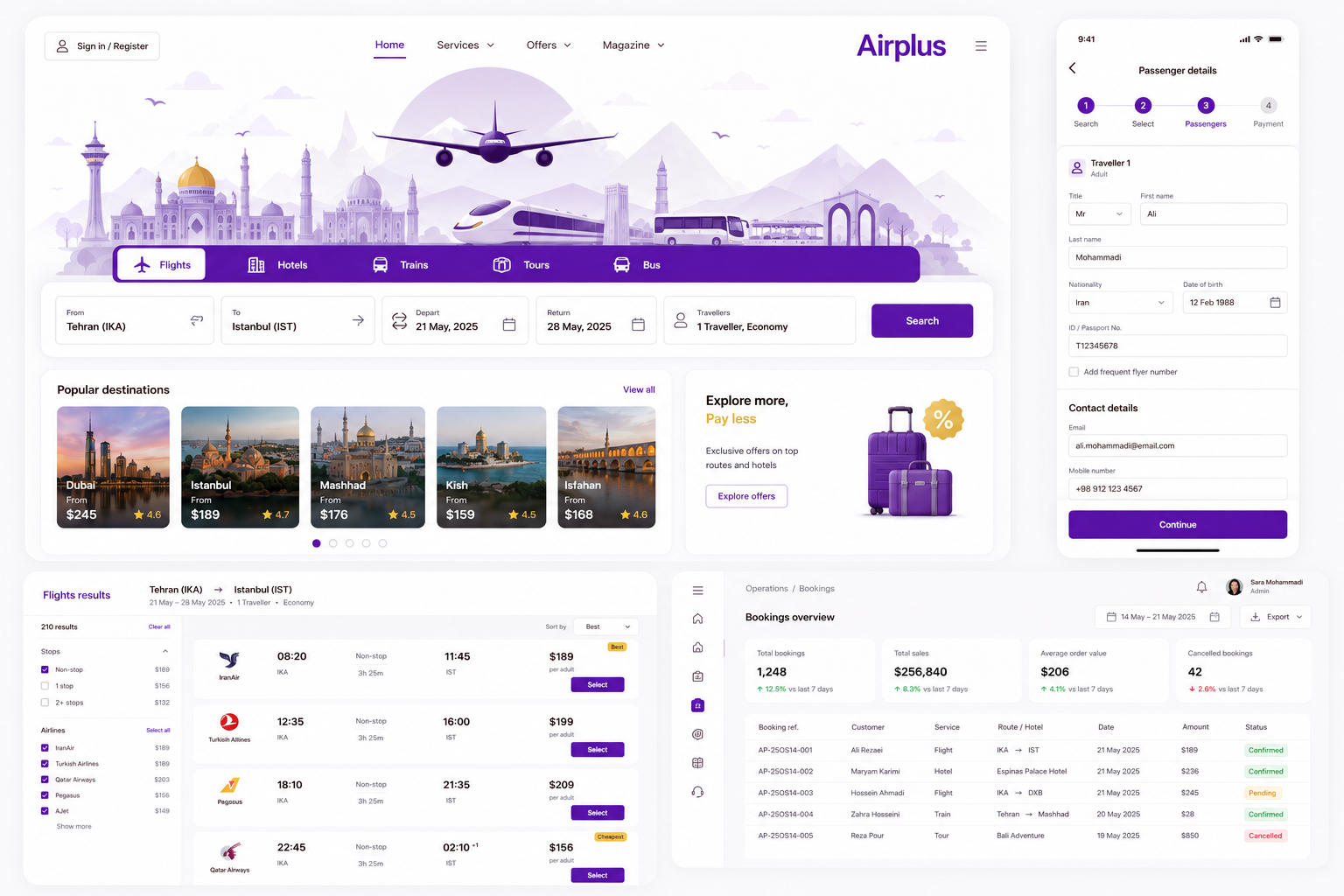
Agency job map — sell, book, report. -
02
Lay four journeys side by side
Flight, hotel, train and tour screens annotated for the same steps. The places where the dialect changed became the redesign targets.
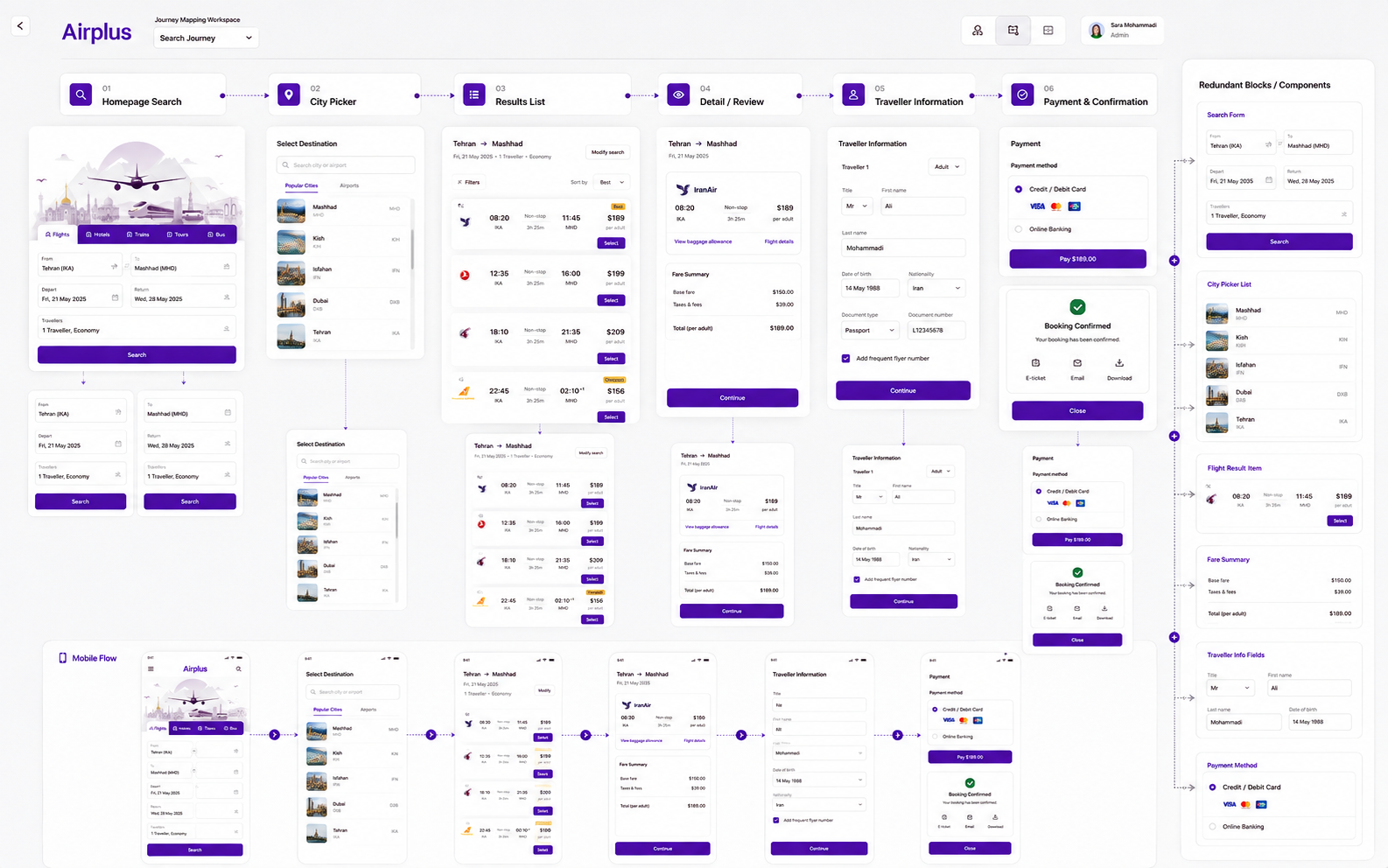
Four inventory journeys, one spine. -
03
Unify search and booking
One search rhythm, one compare pattern, one confirm-and-pay path. Inventory-specific fields stay where they belong — not as a new product every time.
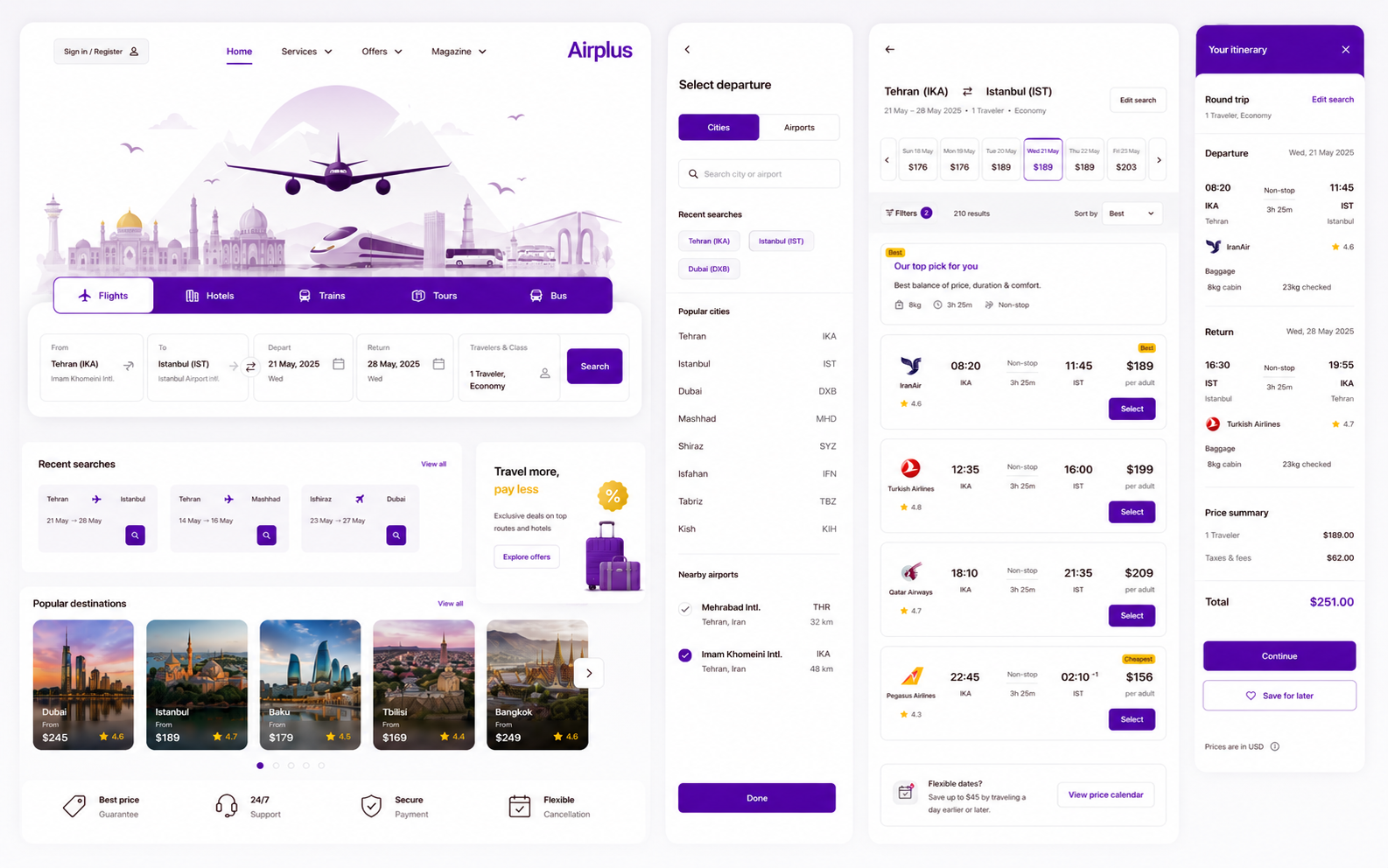
Unified search and booking spine. -
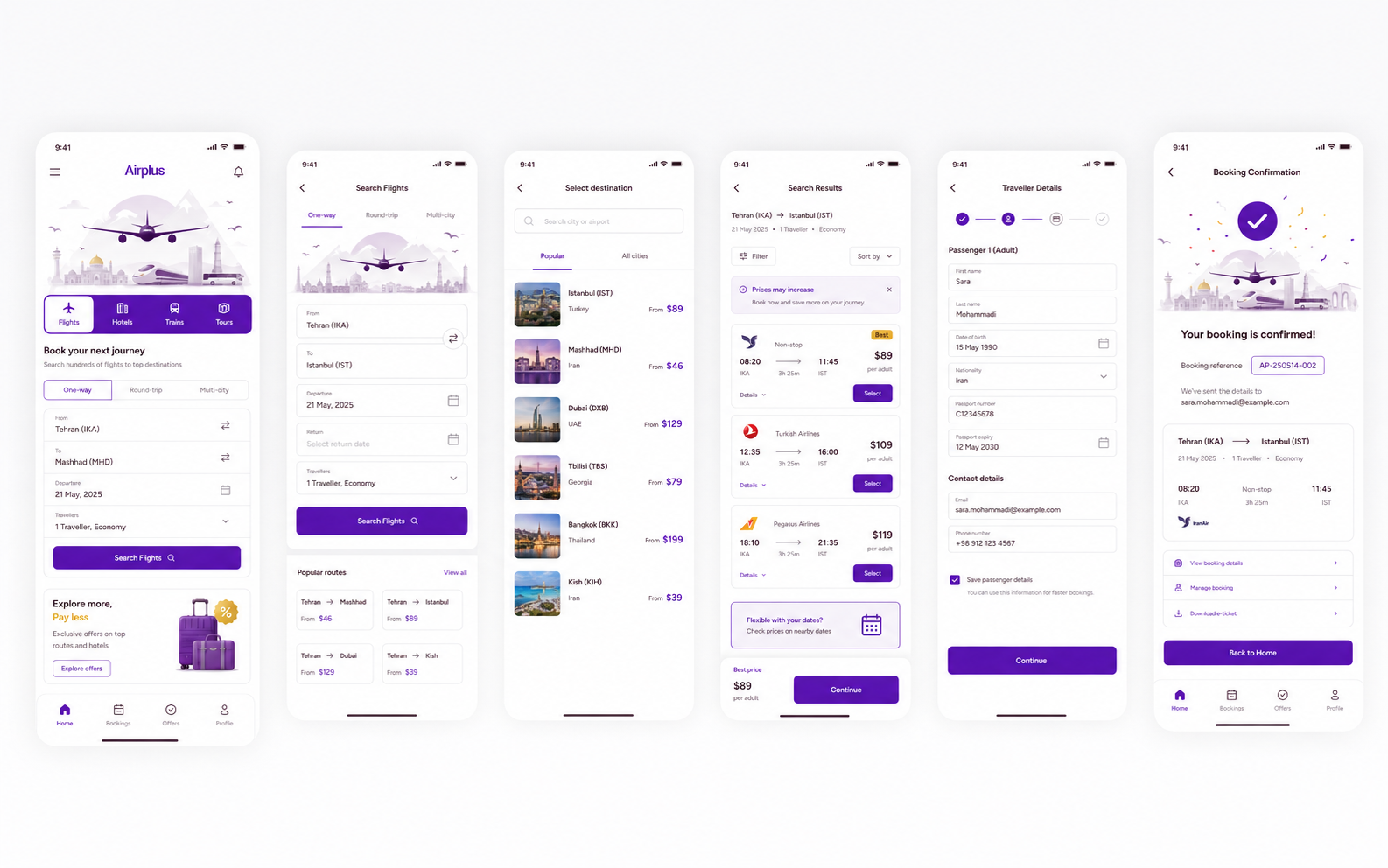
04
Rebuild the funnel mobile-first
Agents and travellers both arrive on small screens. The purchase path was designed at the smallest viewport first, then allowed to expand — without losing fare and room detail.
Mobile-first booking funnel. -
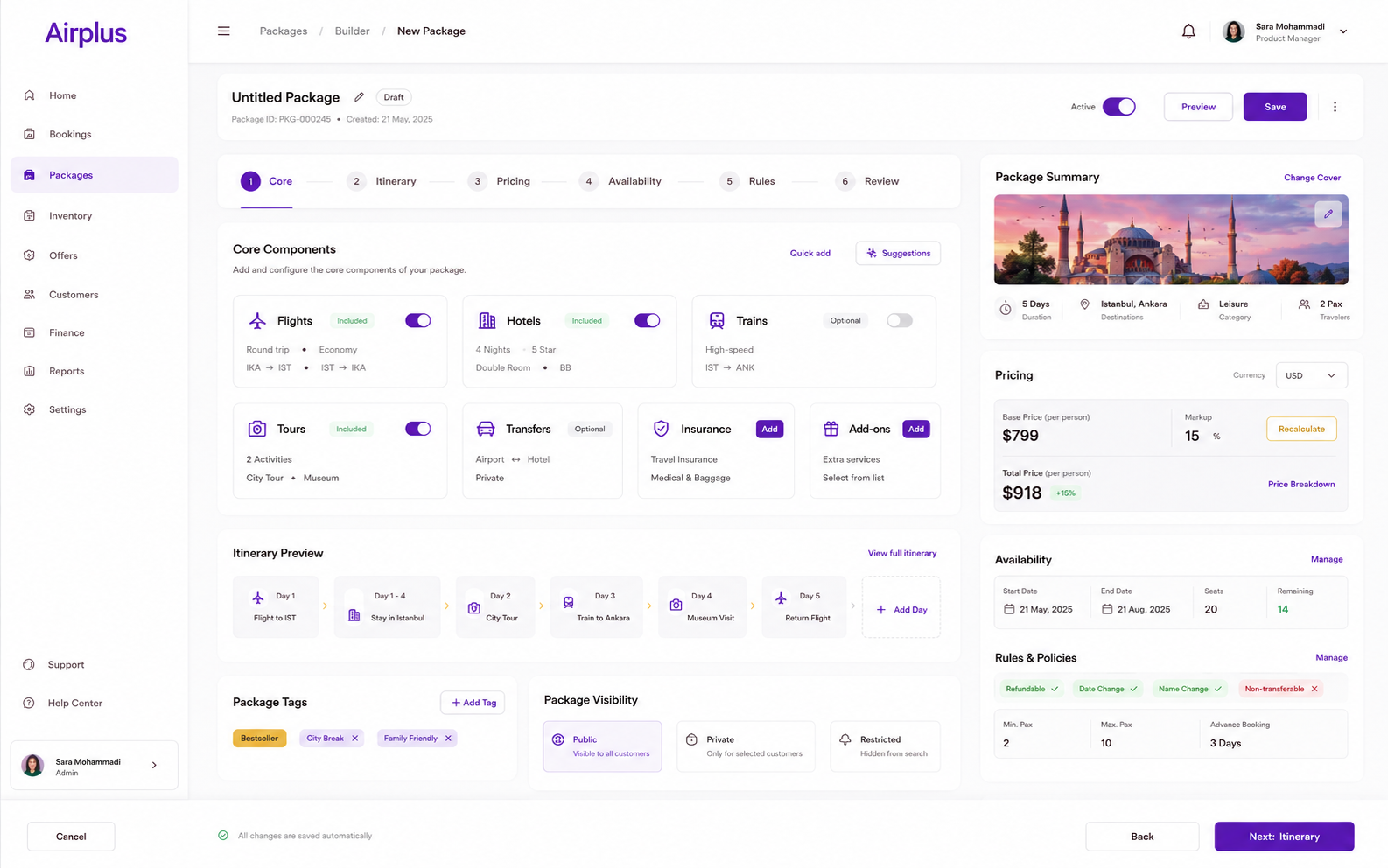
05
Wire sales to reporting
Automation stops being theatre when the sale writes the report. I designed the handoff so multi-desk agencies can see volume without re-keying the day.
Sales automation into reporting. -
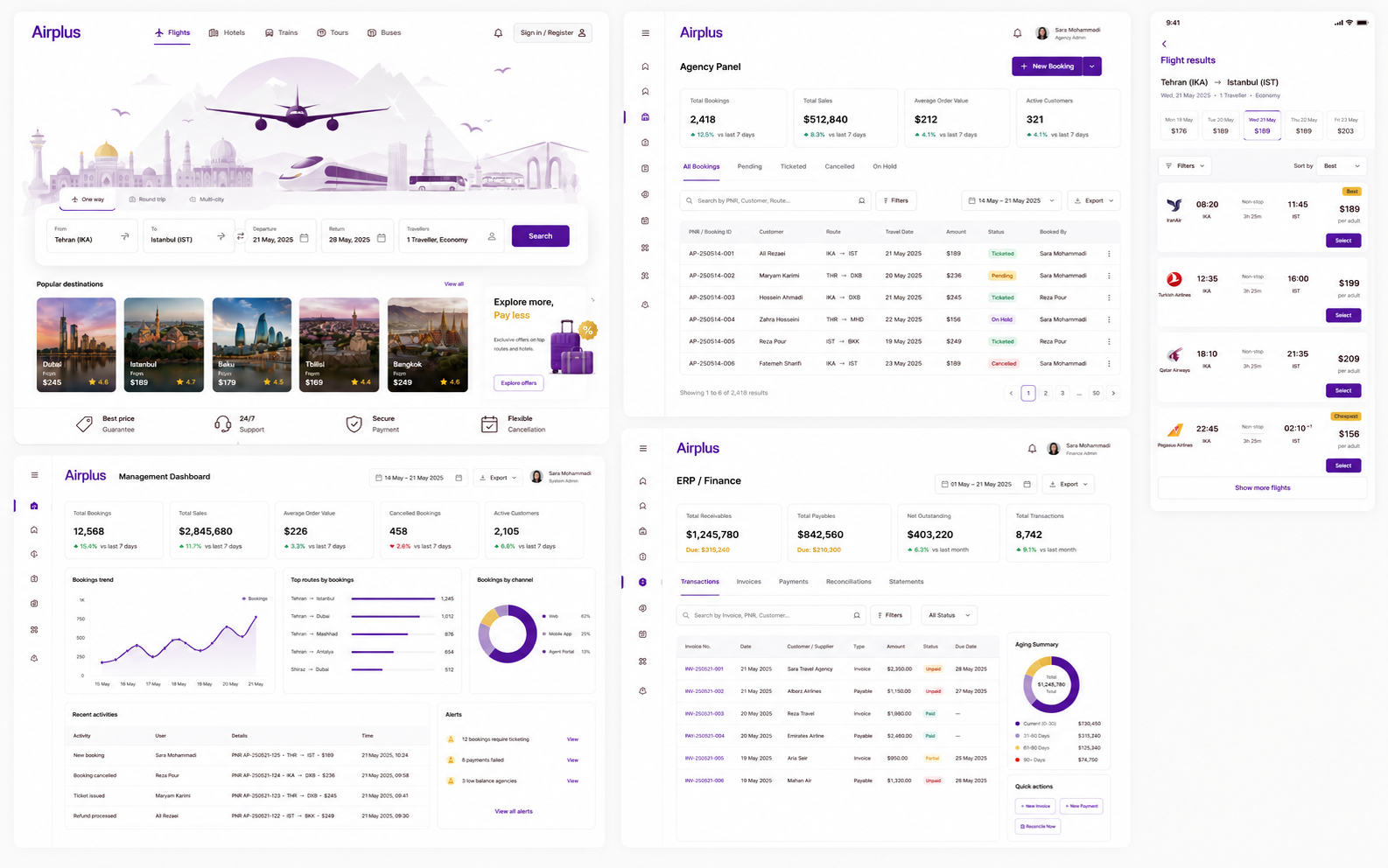
06
Extend into panels and ERP
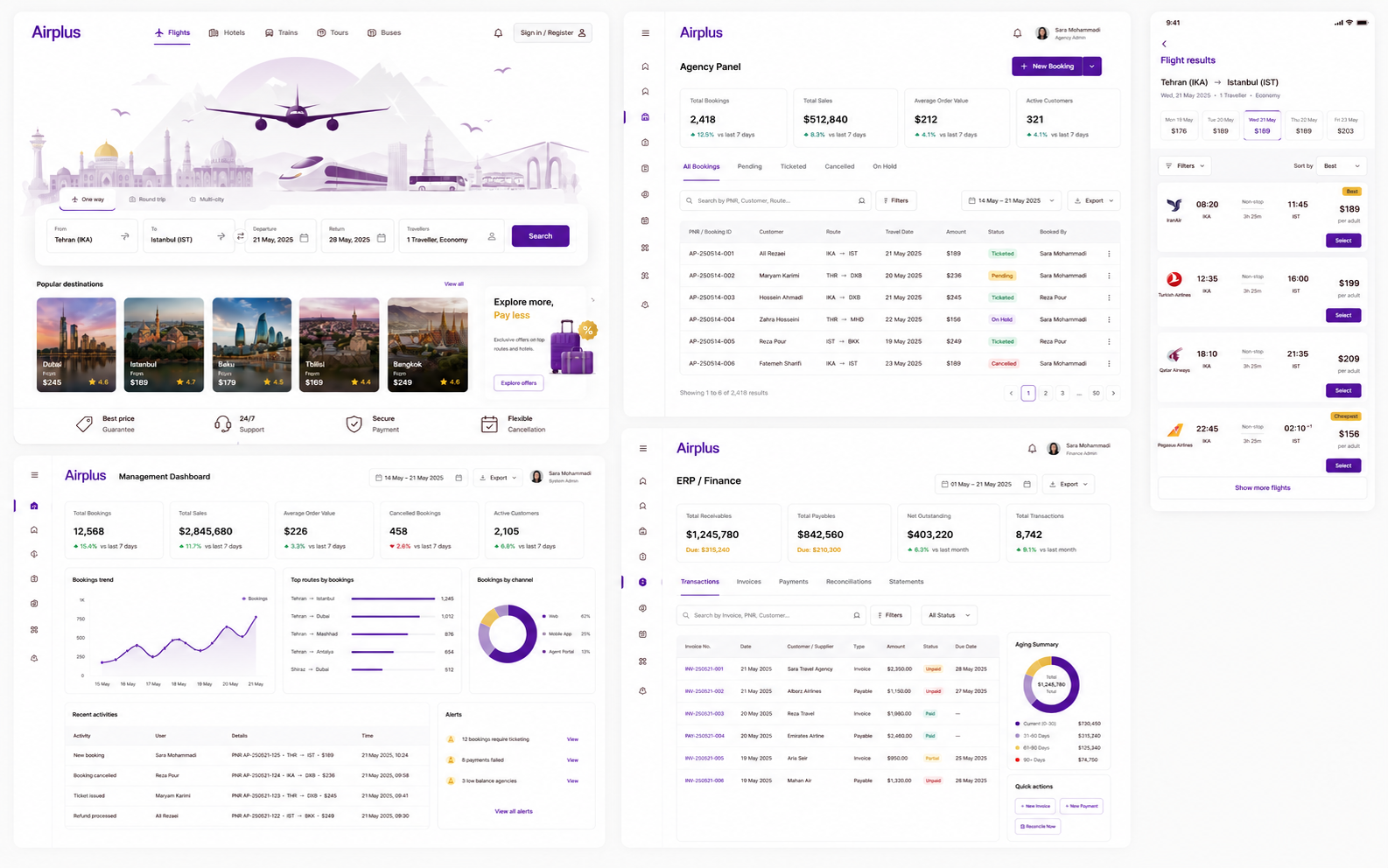
Agency panel, management panel and ERP keep the same words for bookings, fares and travellers — denser where power users need it, never a second vocabulary.
Panels and ERP — one vocabulary.
The Solution
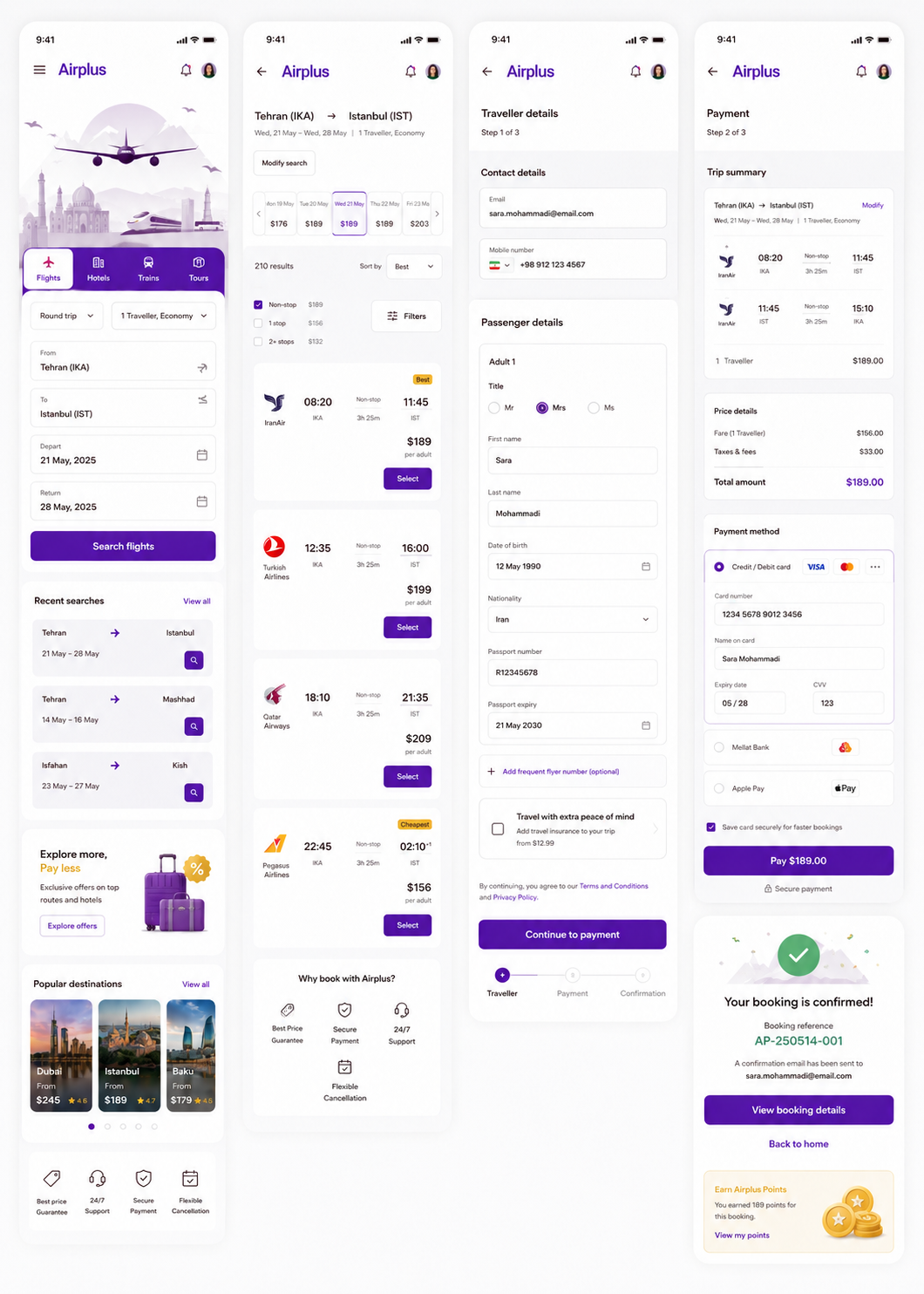
One booking language. Four inventories.
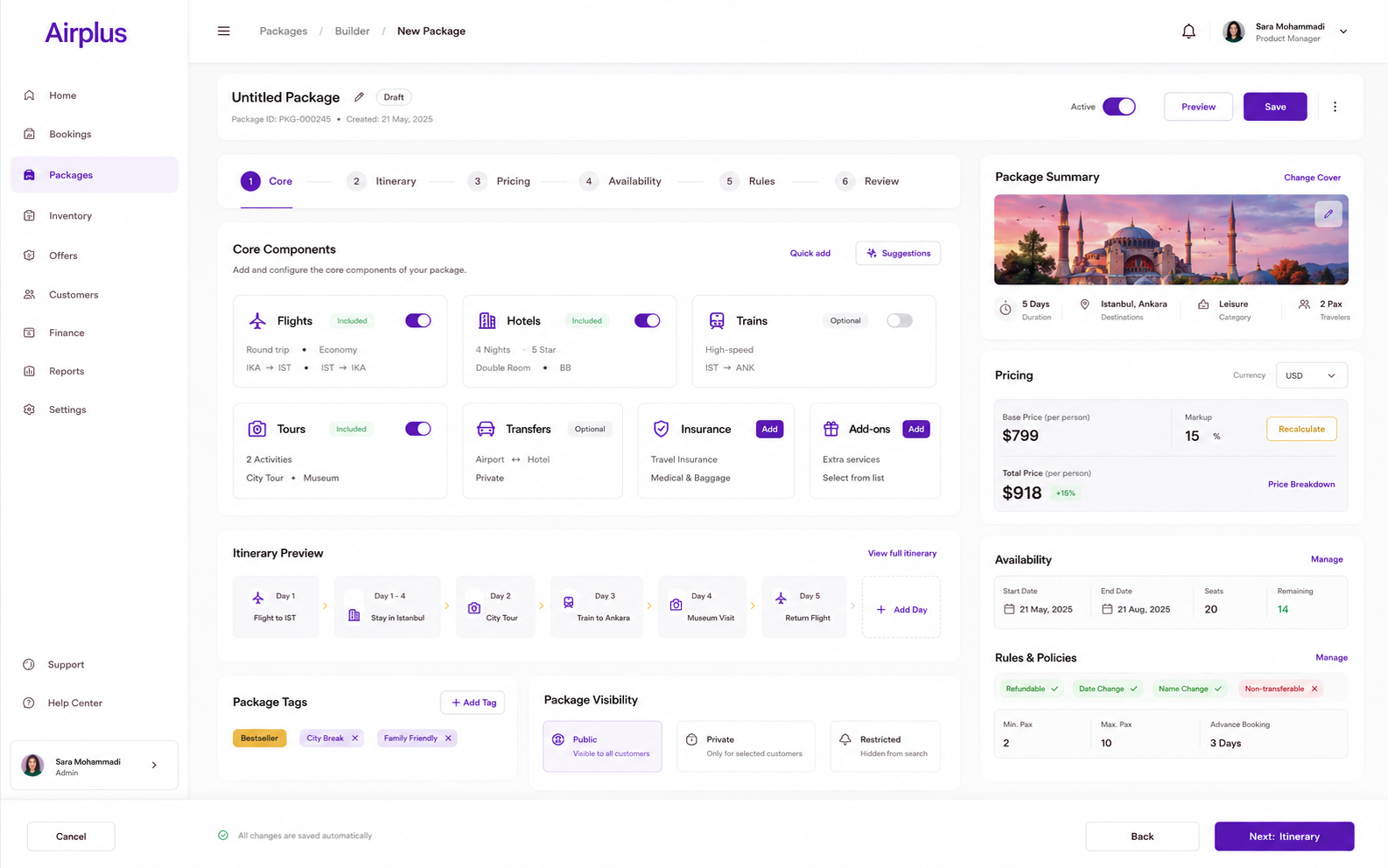
Multi-inventory spine
Flights, hotels, trains and tours share search, compare, pay and confirm — specialised only where the inventory demands it.
Sale writes the report
Sales automation and reporting sit on the same objects, so multi-desk agencies see volume without re-entering the day.
One vocabulary, three densities
Traveller, agency and operations views share bookings and names — they differ only in how much they show at once.
Outcomes
What moved.
- One booking spine across flights, hotels, trains and tours.
- Search → pay → confirm redesigned as a single agency rhythm, mobile-first.
- Sales and reporting wired to the same objects for multi-desk agencies.
- Agency panel, management panel and ERP designed end to end on one vocabulary.
What held.
- Inventories can differ. The desk language cannot — every dialect change costs a sale.
- Reporting that asks agents to re-type what they just sold will always lose to the next phone call.
- Operations want density. Travellers want clarity. Both are right; the mistake is giving them the same screen.